The Household Clothesline and the Routines That Kept It Useful
A household clothesline is easier to use when its position, fittings, and form suit the laundry route, the yard, and the household’s changing routine.
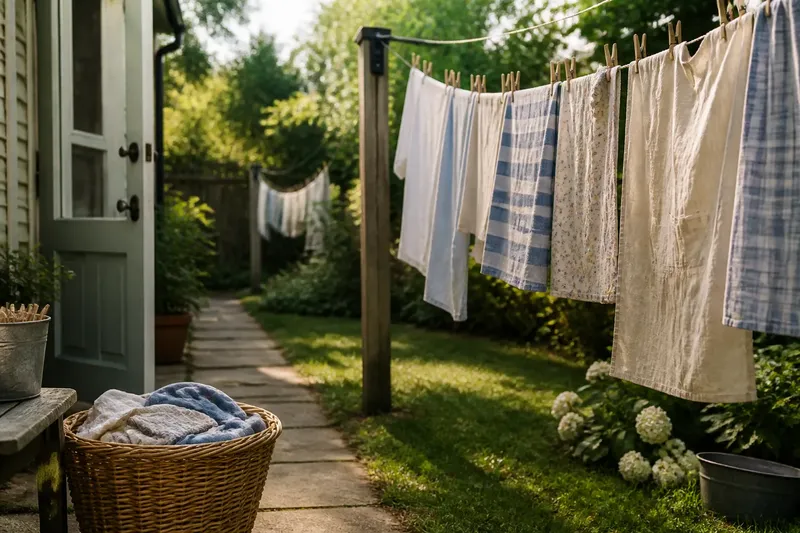
The most common clothesline mistake is choosing a spot because it looks convenient, then discovering that wet laundry has to cross mud or squeeze past the back door. A household clothesline works best when its position follows the actual trip from wash water to drying place and back again. The route, not an assumed tradition, is what makes the arrangement useful.
Start with the laundry route
Before buying cord or fixing anything in place, watch how laundry moves through your home. Does it leave a utility room in a basket, come out of a kitchen wash area, or travel from an indoor rack? Note the doors, steps, gates, and narrow passages along the way. A line that shortens the carry is often more useful than one with the sunniest view.
Think through the return trip too. Clothes tend to come in when the weather shifts, when someone needs a garment, or when daylight is going. If you must carry a full basket around a parked vehicle or through a garden bed, the arrangement will invite delay. A route with firm footing and a clear turn makes the routine easier to keep.
Say you have a back door beside a paved path and a small lawn beyond it. If the line runs across the lawn, you may carry wet clothes through grass; if it begins near the path and reaches a clear part of the yard, the basket stays on firm ground for most of the trip. The expected visible difference is a less awkward route, not a more impressive line.
Choose a form that suits the yard
A fixed line between two sound supports suits a yard where the drying area is predictable and the supports already stand in useful places. A rotary dryer can serve a more open patch and may be folded away when it is not in use. A retractable line keeps the cord out of the way when storage or passage matters, though its anchor points still need a suitable location.
Consider how many items you usually hang at once, but do not treat maximum capacity as the only measure. A line that is too long to reach comfortably, or that crosses a busy path, can turn a simple task into a small negotiation with the household. If several people use it, leave room for baskets and passing rather than claiming every clear stretch of ground for laundry.
Earlier household routines varied by home and place, so there is no single historical pattern to recover. Where laundry was washed and dried outdoors regularly, a fixed line could be part of the yard’s working layout: garments were hung, turned when needed, and brought in as conditions changed. In a home that now relies more on an indoor rack or dryer, the outdoor line may be occasional equipment instead. Its usefulness depends on whether the route still suits the routine.
Match the line and fittings to the setting
Clothesline cord may be made from synthetic fiber, coated wire, or other materials intended for outdoor use. Cord is generally easier to handle and replace; wire may hold a straighter run but can feel less forgiving in the hand. The right choice depends on the product’s stated use, exposure to weather, and the kind of fittings already present.
Look over the supports before deciding what to attach. A sound post or purpose-made clothesline fitting is different from a convenient-looking branch, loose fence rail, or trim board. Choose fittings intended for the line and support, and follow the product instructions and local rules where they apply; do not improvise structural or electrical work.
Keep the span at a height that allows you to hang garments without repeated stretching, while leaving clearance for long items and people passing underneath. A low line can brush the ground; a high one can make each peg an inconvenience. For a wall-mounted retractable unit, consider whether the open line will obstruct a doorway, window, or route through the yard.
Set the line up for ordinary use
Once the location and form are settled, arrange the line so it is easy to reach from the carrying route. Keep pegs in a basket or peg bag that can travel with the laundry. Leave enough open space to sort garments as you hang them, rather than stacking wet clothes in a heap while searching for another handful of pegs.
Hang heavier pieces where the support and line remain steady, and give bulky items room to open rather than fold against themselves. Smaller items can share a section if they do not block access to the rest. The exact order is personal; the useful principle is to avoid making one garment’s shape or placement create extra work for the next.
Notice how the line behaves during use. If clothes slide together, the spacing or the available length may not match the load. If reaching the far end is awkward, move the basket or reconsider which section you use first. A clothesline is not a display; it is a working surface, and small adjustments should make the next load less fussy.
Keep the routine legible as seasons change
In warm, settled weather, an outdoor line may handle most of the household laundry. During wet or cold spells, an indoor rack can take over without requiring the outdoor setup to disappear. Keeping both options in mind makes the clothesline part of a flexible routine rather than a promise that every wash will dry outside.
Before hanging a load, glance at the sky and the path back to the house. If a shower looks likely or the route is becoming slippery, an indoor option may be the less irritating choice. When the line is not needed, retract a retractable model or fold a movable frame according to its instructions, and keep the passage clear.
That division of work can change as household schedules and equipment change. A line used regularly may become one tool among several, sharing the task with a dryer or indoor rack. Its place is practical: it offers an outdoor drying surface when the weather and household schedule allow, without requiring the household to organize every day around it.
What should you consider before choosing a clothesline?
Where should a clothesline go?
Choose a route that connects the laundry area to the drying spot without crossing muddy ground, obstructing a door, or cutting through a busy passage. A clear carrying path often matters more than a distant patch of ideal sun.
Is a fixed line or a retractable line better?
A fixed line suits a yard with a consistent, unobstructed drying area. A retractable line can keep a passage clear between uses, but it still needs appropriate supports and a convenient route for carrying laundry.
What should I check on an existing line?
Look for frayed cord, loose fittings, corrosion, or a support that appears unstable, and stop using any part that seems unsafe. Replace parts only with compatible products and follow their instructions.
How can a clothesline fit a changing household routine?
Use it when outdoor conditions and the day’s schedule suit the task, and keep an indoor rack available for other times. A household clothesline is most useful when it supports the routine rather than dictating it.
Give the line a small place in the regular routine
After use, return the pegs to their container and leave the route clear for the next trip. Check the cord and fittings occasionally, especially after rough weather, and deal with wear before the line becomes awkward to use. That brief attention keeps the household clothesline ready without turning it into another grand seasonal project.
Its usefulness comes from being adaptable: a fixed span, a folding frame, or a retractable cord can all serve the same modest purpose. The practical question is whether the line’s position and form still fit the way laundry actually moves through the home.